Nigeria’s path to independence is a key chapter in African history, symbolizing the struggle for self-determination. As the most populous country in Africa, Nigeria gained independence from Britain on October 1, 1960. This achievement came after decades of activism, negotiations, and growing nationalism. The journey to independence shaped Nigeria’s political and social landscape, laying the foundation for the nation’s future.

Pre-Colonial Nigeria
Before British colonization, the area that is now Nigeria was home to several powerful kingdoms, empires, and societies. The Yoruba Kingdoms, Hausa-Fulani Emirates, and Igbo communities had their own governance systems, engaging in trade and diplomacy. Furthermore, the Oyo Empire and Benin Kingdom were notable for their influence and regional control.
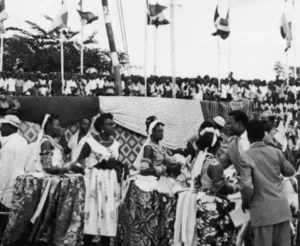
However, British forces arrived in the late 19th century, seeking to expand their influence during the European scramble for Africa. By 1914, the British had merged northern and southern Nigeria into one entity, marking the beginning of formal colonial rule in the region.
Nationalism and the Push for Independence
Colonial Nigeria operated under indirect rule, a system where British officials governed through local traditional rulers. This method worked in the north, where established emirates had centralized power. In contrast, the south, particularly among the Igbo, resisted this system, leading to unrest and tension.
"Give thanks to the Lord for He is good: His love endures forever."
In the early 20th century, a growing number of Nigerians began advocating for self-rule. Herbert Macaulay, known as the father of Nigerian nationalism, founded the Nigerian National Democratic Party (NNDP) in 1923. The NNDP, as a result, pushed for increased rights and political representation, laying the foundation for later independence movements.
As political awareness grew, other leaders like Nnamdi Azikiwe, Obafemi Awolowo, and Ahmadu Bello emerged. They formed regional parties and pressed for independence. The Nigerian Youth Movement (NYM) and other political organizations rallied Nigerians for self-determination. These movements, especially after World War II, intensified as Nigerians who fought for Britain returned with a heightened awareness of their political rights.
Post-War Reforms and Advancements
After World War II, Britain was economically and politically weakened, leading to shifts in its colonial policies. Consequently, the Nigerian independence movement gained significant momentum in the post-war years. Several constitutional reforms were introduced, allowing more Nigerians to participate in governance. The Richards Constitution of 1946, Macpherson Constitution of 1951, and Lyttleton Constitution of 1954 progressively expanded political participation and regional autonomy.
By the mid-1950s, regional governments were granted more control. The western and eastern regions achieved self-government in 1957, followed by the northern region in 1959. Additionally, a series of constitutional conferences in London between Nigerian leaders and British officials paved the way for full independence.
Nigeria Gains Independence
Finally, on October 1, 1960, Nigeria officially became an independent nation. Sir Abubakar Tafawa Balewa was appointed the country’s first Prime Minister, and Dr. Nnamdi Azikiwe became the Governor-General. The country celebrated its newfound freedom with optimism. However, challenges lay ahead. In 1963, Nigeria became a republic, and Azikiwe became the first President of Nigeria.
Post-Independence Challenges
Although Nigeria’s independence was a major achievement, the early years were marked by ethnic, regional, and political tensions. The northern, western, and eastern regions were dominated by different political parties, each with its own agenda. This division, in turn, fueled conflict over resources, power, and governance.
The Nigerian Civil War (1967–1970), also known as the Biafran War, tested the unity of the newly independent state. Unfortunately, the war resulted in immense human and economic losses. However, Nigeria ultimately remained intact. The post-war era saw efforts to rebuild and promote national unity.
Legacy of Nigeria’s Independence
Nigeria’s independence was a landmark achievement, setting the stage for its future as a leader in Africa. The struggles and sacrifices of nationalist leaders like Azikiwe, Awolowo, and Bello are celebrated in Nigerian history. Moreover, the country’s emergence as a sovereign state inspired other African nations to seek their own independence, contributing to the wave of decolonization in the 1960s.

Conclusion
In conclusion, Nigeria’s independence marks a turning point in its history, signaling the end of colonial rule and the beginning of self-governance. p for a new era. Today, Nigeria’s role in African politics and global affairs is a testament to its resilience and leadership.
Related posts:
No related posts.
