Nigeria has had many leaders, but Dr. Nnamdi Azikiwe holds a special place in history. He was Nigeria’s first president, serving from 1963 to 1966. His leadership played a key role in Nigeria’s independence and early development.
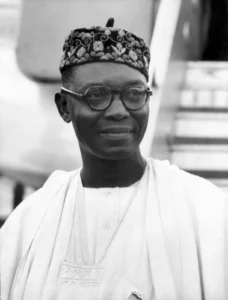
This article explores his early life, presidency, achievements, and lasting impact.
Who Was Nnamdi Azikiwe?
Dr. Nnamdi Azikiwe, also known as “Zik of Africa,” was born on November 16, 1904, in Zungeru, Northern Nigeria. He was a nationalist, journalist, and political leader who fought for Nigeria’s freedom from British colonial rule.
Early Life and Education
- He studied in Nigeria and the United States, earning degrees in political science and journalism.
- After completing his education, he worked as a journalist and publisher, using newspapers to promote independence.
- His writings inspired many Nigerians to demand self-governance.
Due to his strong advocacy for independence, he became one of Nigeria’s most influential voices before independence.
Nnamdi Azikiwe as Nigeria’s First President
On October 1, 1963, Nigeria became a republic, and Nnamdi Azikiwe was elected as the first president. However, his role was mostly ceremonial, since the Prime Minister, Sir Abubakar Tafawa Balewa, held executive power.
Key Achievements as President
- He promoted national unity among Nigeria’s diverse ethnic groups.
- He encouraged education and economic growth, leading to the establishment of more schools and universities.
- He also advocated for African independence, supporting other nations in their fight against colonial rule.
Although his presidency was symbolic, his influence in shaping Nigeria’s direction was significant.
The 1966 Coup and Azikiwe’s Removal
In January 1966, a military coup overthrew the civilian government. The Prime Minister was killed, and the military took control.
"Give thanks to the Lord for He is good: His love endures forever."
As a result, Azikiwe was forced to step down, marking the end of Nigeria’s First Republic. Following this, he took on the role of an elder statesman, offering guidance on political matters.
Even though he was no longer in power, he continued to contribute to Nigeria’s political discussions.
The Legacy of Nnamdi Azikiwe
Dr. Nnamdi Azikiwe remains one of Nigeria’s greatest leaders. His contributions to independence, democracy, and national unity continue to inspire Nigerians today.
Why He Is Important
- He was a pioneer of Nigerian nationalism, leading the push for independence.
- His leadership helped Nigeria gain freedom from British rule.
- He laid the foundation for modern democracy in Nigeria.
Even after his death in 1996, his influence continues to shape Nigeria’s political landscape. Furthermore, his face is featured on Nigeria’s ₦500 note, highlighting his national importance.
Final Thoughts
Dr. Nnamdi Azikiwe’s impact on Nigeria cannot be forgotten. As Nigeria’s first president, he played a major role in shaping the nation’s history. His dedication to freedom, education, and national unity made him a true hero of Africa.
Because of his efforts, Nigeria was able to transition from colonial rule to an independent republic. Today, his legacy remains a source of inspiration for future generations.
For more insightful articles on Nigerian history, visit Informationhood.
