Voting and elections are crucial elements of any democratic system, and Nigeria is no exception. If you are a citizen of Nigeria, understanding the voting process, election laws, and your rights as a voter is essential. Here are some frequently asked questions about voting and elections in Nigeria:
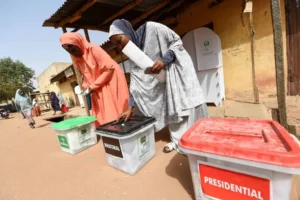
1. Who Is Eligible to Vote in Nigeria?
To be eligible to vote in Nigeria, you must meet the following criteria:
- Be a Nigerian citizen.
- Be at least 18 years old.
- Possess a valid Permanent Voter’s Card (PVC).
- Be registered on the Independent National Electoral Commission (INEC) voters’ register.
- Be of sound mind and not convicted of a crime involving dishonesty or fraud.
2. How Do I Register to Vote in Nigeria?
To register as a voter in Nigeria, you need to:
- Visit any INEC office or registration center in your area.
- Provide valid identification and personal details.
- Complete the registration form, after which your biometric data (fingerprints and photograph) will be captured.
- Once your registration is successful, you will receive a Temporary Voter’s Card (TVC), and your Permanent Voter’s Card (PVC) will be available for collection later.
3. What Is a Permanent Voter’s Card (PVC), and Why Is It Important?
A PVC is an identification card issued by INEC that allows you to vote during elections. It contains your personal information and biometric details. Without a PVC, you cannot vote in any election in Nigeria.
4. How Do I Collect My Permanent Voter’s Card (PVC)?
You can collect your PVC at the INEC office or registration center where you registered to vote. INEC announces periods for the distribution of PVCs before elections. It is essential to collect your PVC before the deadline to ensure you can participate in upcoming elections.
5. Can I Vote if I Lost My Permanent Voter’s Card (PVC)?
No, you cannot vote without your PVC. If you lose your card, you should report the loss to INEC and apply for a replacement before the election date. The process includes filling out a replacement form and providing necessary identification.
6. What Happens on Election Day?
On election day, registered voters go to their designated polling units to cast their votes. The process typically involves the following steps:
"Give thanks to the Lord for He is good: His love endures forever."
- Verification of your identity and PVC.
- Accreditation using the biometric system (fingerprint or facial recognition).
- Receiving a ballot paper from the election officials.
- Marking your choice of candidate or political party on the ballot.
- Submitting your ballot into the ballot box.
7. Can I Vote if I Am Away From My Registered Polling Unit?
No, you cannot vote outside your designated polling unit. You must vote at the polling unit where you are registered. If you plan to move to a different location, you must apply for a transfer of your voter registration to the new polling unit before elections.
8. What Is the Role of the Independent National Electoral Commission (INEC)?
INEC is the body responsible for overseeing elections in Nigeria. It manages voter registration, prepares the voters’ register, organizes and supervises elections, and announces the results. INEC also ensures that elections are conducted fairly and transparently.
9. What Should I Do if I Witness Electoral Malpractice?
If you witness electoral malpractice, such as vote-buying, intimidation, or violence, you should report it to INEC officials, law enforcement agencies, or election observers present at the polling unit. You can also file a formal complaint with INEC after the election.
10. What Happens If the Election Results Are Disputed?
If election results are disputed, candidates or political parties can file a petition with the Election Tribunal. The tribunal will investigate the claims and determine if the election was conducted fairly. If the tribunal finds that the results were manipulated or invalid, it can order a rerun or declare a different winner.
11. What Is the Voting Process for Presidential Elections?
In presidential elections, Nigerians vote for their preferred candidate by marking the ballot paper. The candidate who receives the majority of votes and secures at least 25% of the vote in two-thirds of Nigeria’s 36 states is declared the winner. If no candidate meets this requirement, a runoff election is held between the top two candidates.
12. How Are Election Results Announced?
Election results are announced by INEC after the votes have been counted. Results are first announced at the local polling unit level, then collated at higher levels (local government areas and state collation centers), and finally announced at the national level for presidential elections.
13. Can I Vote in Elections Outside Nigeria?
No, currently, Nigerians living abroad (in the diaspora) cannot vote in Nigerian elections. Voting is only available to those physically present at their polling units in Nigeria.
14. How Often Are Elections Held in Nigeria?
General elections in Nigeria are held every four years. These include presidential, gubernatorial, and National Assembly elections. Local government elections are also held periodically, depending on the state.
15. Can People With Disabilities Vote?
Yes, people with disabilities can vote in Nigeria. INEC has introduced measures to ensure the inclusion of persons with disabilities, such as providing assistance at polling units and prioritizing them in the voting process.
These FAQs cover the essential aspects of voting and elections in Nigeria. By understanding your rights and responsibilities, you can actively participate in the democratic process and contribute to the nation’s governance.
