The Igala Tribe: Kogi State’s Cultural Heritage
Good day, our esteemed readers. This piece focuses on the Igala tribe, one of the ethnic groups in Kogi State. We will explore their traditional life, culture, and other related aspects. This is the first article in a series about this work. We hope you spare some time to read through.
Introduction
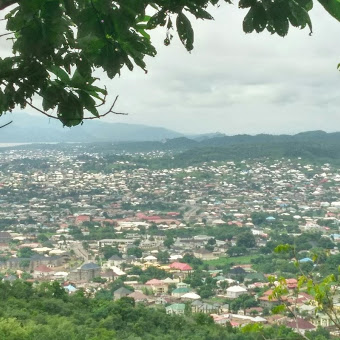
Kogi State was created on 21st August 1991 by the administration of General Ibrahim Babangida. It lies south of Nigeria’s Federal Capital Territory, Abuja, and shares boundaries with Nassarawa, Kwara, Ondo, Ekiti, Benue, Delta, Edo, Enugu, Niger, and Anambra states. This unique positioning makes Kogi the only state in Nigeria with so many neighboring states.
Kogi, also known as the Confluence State, was once part of the Kabba Province. Lokoja, the state capital, served as Nigeria’s former administrative headquarters after the amalgamation of the northern and southern protectorates under British colonial rule (1901–1902). The city is located at the confluence of Nigeria’s two largest rivers: Niger and Benue. It is about a two-hour drive from Abuja.
The state has a population of over four million people. Its fertile land supports agriculture, the backbone of the economy. Crops like yam, cassava, rice, maize, guinea corn, cocoa, coffee, cashew, oil palm, melon, and sugar cane are cultivated commercially.
Kogi is a miniature Nigeria with several ethnic groups. The most prevalent are the Igalas, Ebiras, and Okuns. The state has 21 local government areas, including Adavi, Ankpa, Ajaokuta, Bassa, Dekina, Ibaji, Idah, Igalamela/Odolu, Ijumu, Kabba-Bunu, Kogi, Lokoja, Mopamuro, Ofu, Yagba West, and Yagba East.
The Importance of Cultural Preservation
Many Nigerian communities have lost much of their cultural heritage. This loss has affected societal development. In contrast, countries like China, India, and Egypt have preserved their culture with pride. They maintain traditional arts, literature, music, religion, and industrial skills, which continue to shape modern society.
The Igala people, though a minority, have maintained strong cultural norms. Their language, traditions, and customs remain central to their identity. Studying the Igala offers valuable lessons on cultural consciousness and preservation.
"Give thanks to the Lord for He is good: His love endures forever."
In this article, we will explore some of their ancient practices, the significance of these traditions, and their effects on society. We hope this work will encourage cultural preservation elsewhere.
— Dekina, 28th May 2017
Igala Traditional Governance
Before British colonial rule, the Igala kingdom was governed by the Atta and his council of chiefs. This system dates back centuries. When the British arrived, they introduced a new governance system. The Igala Native Authority was created, headed by the Atta. He acted as an intermediary between the British and the Igala people.
In 1968, the Native Authority was split into three local government councils: Idah, Ankpa, and Dekina. Later, Bassa was carved from Dekina in 1977, Olamaboro from Ankpa in 1989, and Ofu from Idah. These six councils formed the first administrative structure in the Igala kingdom under colonial rule.
Resistance Against Colonial Rule
Amana-bogili led the first recorded revolt against British colonial authorities. A staunch traditionalist, he opposed the colonial system and sought to protect Igala culture. Although his rebellion was largely unsuccessful, he became legendary for his alleged supernatural powers.
It was said he could summon storms, extinguish fires, heal the sick with words, and punish wrongdoers. Some claimed he could transform into a wolf to carry out his deeds. Amana-bogili represented the last of a powerful line of traditional Igala leaders.
“It is utter nonsense to believe in the idea that the white man had superior powers over the Blackman. Even during the slave trade, Europe lagged behind African civilization in many ways. With special psychic powers, the Blackman could move objects, summon rain, or disappear at will.”
We will stop here for now. Stay tuned for the next part of this series, which will explore the Igala’s traditional practices and the roles they play in their communities.
Related posts:
 Anwar ul-Islam Girls High School, Ifako/Ijaye
 Tofek College, Ifako-Ijaiye and the Role of Private Secondary Education in Lagos
 Bopton Comprehensive College, Lagos: Excellence in Secondary Education
 Best Affordable Laptops for West Bay Schools Students in Lagos
 Best Affordable Laptops for Kayron International Schools Students in Lagos
 Best Affordable Laptops for Ayedere Ajibola Senior High School Students
 Best Affordable Laptops for Kings High School, Satellite Town Students
 Affordable Laptop Guide for Royal College Otta Students

https://www.geto.space/tiolkeepimphar ulrpany shaenah 553b5f3c31
https://kulasya.com/eworungar foeraf nantan 4b1f4b8a67
http://serioussmallbusiness.com/index.php/component/k2/item/2-useful-links/2-useful-links xaverwan glynndin 6b11cea230
Hi there, yeah this piece of writing is truly pleasant and I have learned lot of things from it about blogging.
thanks.
I think what you composed made a ton of sense. However, think on this,
what if you added a little information? I ain’t suggesting your information isn’t good, but suppose you added a title
that grabbed a person’s attention? I mean The Traditional Life Of The Igala Tribe (Part 1) » InformationHood is kinda plain. You might look at Yahoo’s home page and
see how they create news titles to grab viewers interested.
You might add a video or a pic or two to grab people interested about everything’ve written. Just my opinion, it could bring your website a little bit more interesting.
Hi just wanted to give you a brief heads up and let you know a few
of the images aren’t loading correctly. I’m not sure why
but I thjnk itss a linking issue. I’ve tried it in two different web browsers and both show the same outcome.
Thanks to my father who informed me regarding this web site, his webpage
is really awesome.
Hey, I think your website might be having browser compatibility issues.
When I look at your website in Safari, it looks fine
but when opening inn Intetnet Explorer, it has some overlapping.
I just wanted to give you a quick heads up! Other then that, wonderful blog!
I simply wished to thank you very much once more. I do not know what I
could possibly have tried without these methods shared by you on this area.
It absolutely was a very distressing case for me personally,
nevertheless taking note of a specialised form you dealt with
that made me to cry with gladness. Now i’m happier for the
assistance and in addition hope that you comprehend what
an amazing job you have been carrying out instructing other individuals by way of your
webpage. I’m certain you have never come across any
of us.
https://wakelet.com/wake/1BTaQtRICmpnPAc_R9QOx caleuchen talara 0bc4017a08
I absolutely love your blog.. Very nice colors & theme. Did you make this web site yourself?
Please reply back as I’m wanting to create my own website and would like
to find out where you got this from or exactly what the theme is named.
Kudos!
If it is likely to remain at your house, only to appear for those who have company, storage may not
be as important. A one time small investment will
serve your family wwll for a lot of years. An Aero bed could make your property a popular option for guests as it has the power to change any area right into
a comfortable space to your guests to sleep on.
Feel free to surf to my website: Compare Air Mattresses (Filomena)
https://wakelet.com/@trancoganli2 chantshar nineta 28d1105732
My brother suggested I might like this website. He was totally right.
This post truly made my day. You can not consider simply how a lot time I had spent
for this information! Thanks!