Bola Ahmed Tinubu is a key figure in Nigerian politics, known for his role in shaping Lagos State and influencing national governance. Over the years, he has played a significant role in Nigeria’s political transformation. From his early political career to becoming Nigeria’s president, Tinubu’s leadership has left a lasting impact.
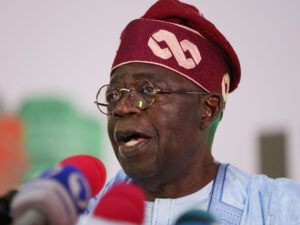
Early Life and Education
Bola Ahmed Tinubu was born on March 29, 1952, in Lagos, Nigeria. After completing his early education in Nigeria, he traveled to the United States, where he attended Chicago State University. Eventually, he earned a degree in Accounting, which later influenced his approach to governance and economic policies.
Political Career
Senator in the Third Republic (1992-1993)
Tinubu entered politics in the early 1990s. In 1992, he was elected as a Senator representing Lagos West under the Social Democratic Party (SDP). Unfortunately, his tenure was cut short when General Sani Abacha took over the government in 1993, dissolving all democratic structures.
Governor of Lagos State (1999-2007)
Following Nigeria’s return to democracy in 1999, Tinubu contested and won the Lagos State governorship election under the Alliance for Democracy (AD). Subsequently, he served two terms (1999-2007) and introduced several transformational projects.
His key achievements as governor include:
- Improved infrastructure – He expanded roads, built bridges, and enhanced public transportation.
- Economic growth – By focusing on tax reforms, he significantly increased Lagos’ internally generated revenue (IGR).
- Education and healthcare reforms – He invested in building new schools and hospitals to improve public services.
- Security enhancements – In response to rising crime, he established the Lagos State Security Trust Fund to support law enforcement agencies.
Political Influence and Kingmaker Status
After leaving office in 2007, Tinubu remained highly influential in Nigerian politics. In 2013, he played a key role in merging several opposition parties, which led to the formation of the All Progressives Congress (APC). Consequently, this move created a strong political platform that challenged the ruling party.
As a result, his influence contributed to the victory of Muhammadu Buhari in both the 2015 and 2019 presidential elections. Additionally, he mentored many politicians, positioning himself as one of Nigeria’s most powerful political strategists.
Presidency (2023-Present)
In 2023, Bola Tinubu contested and won the presidential election under the APC. His administration has focused on economic reforms, infrastructure development, and national security.
"Give thanks to the Lord for He is good: His love endures forever."
However, his presidency has faced several challenges, including:
- Economic instability and inflation
- The impact of fuel subsidy removal on citizens
- Rising insecurity in different parts of the country
Despite these issues, Tinubu remains committed to his campaign slogan, “Renewed Hope”, as he works towards implementing policies aimed at economic recovery and national development.
Legacy and Impact
Tinubu’s legacy is built on three major pillars:
- Transforming Lagos into Nigeria’s economic hub through innovative policies.
- Expanding the democratic landscape by helping merge opposition parties.
- Mentoring future leaders, many of whom now hold key positions in government.
While some critics argue that his leadership style is controversial, his influence on Nigerian politics remains undeniable.
Final Thoughts
Bola Ahmed Tinubu’s life and legacy are deeply tied to Nigeria’s political evolution. Over the years, his leadership has shaped both Lagos State and the country at large. Whether as a governor, political strategist, or president, he continues to define Nigeria’s future.
